
Summary:
Urinary incontinence (UI) affects over 67 million women in the United States, placing a heavy burden on their emotional well-being, daily physical functioning, and financial stability. Despite its widespread prevalence, UI remains severely underreported and undertreated, with over half of symptomatic, undiagnosed women never discussing their condition with a healthcare professional due to stigma, embarrassment, or misconceptions. To address this challenge, the Centers for Disease Control and Prevention (CDC) supported a collaborative initiative with the National Association for Continence (NAFC), Phreesia, and Health Equity Outcomes (HEO). Together, these organizations aimed to bridge critical gaps in UI surveillance, care-seeking behaviors, and patient education.
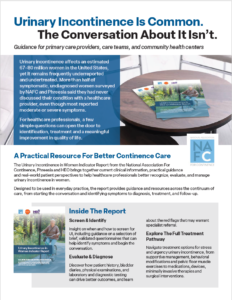
HEO co-authored and disseminated the resulting Urinary Incontinence Indicator Report and Urinary Incontinence One Pager, which provide essential and current epidemiological analysis, clinical insights, and patient-reported survey data. By synthesizing evidence on risk factors, treatment disparities, and barriers to care, the report equips public health leaders to implement provider-led screening programs, reduce care disparities among minority populations, and improve overall quality of life for millions of affected women.